Hazen Featured in New Article: "Baltimore: Great Poets Live Here"
Poet, Elizabeth Hazen, and her second collection, Girls Like Us, are featured in this Fishbowl article exploring the poets of Baltimore
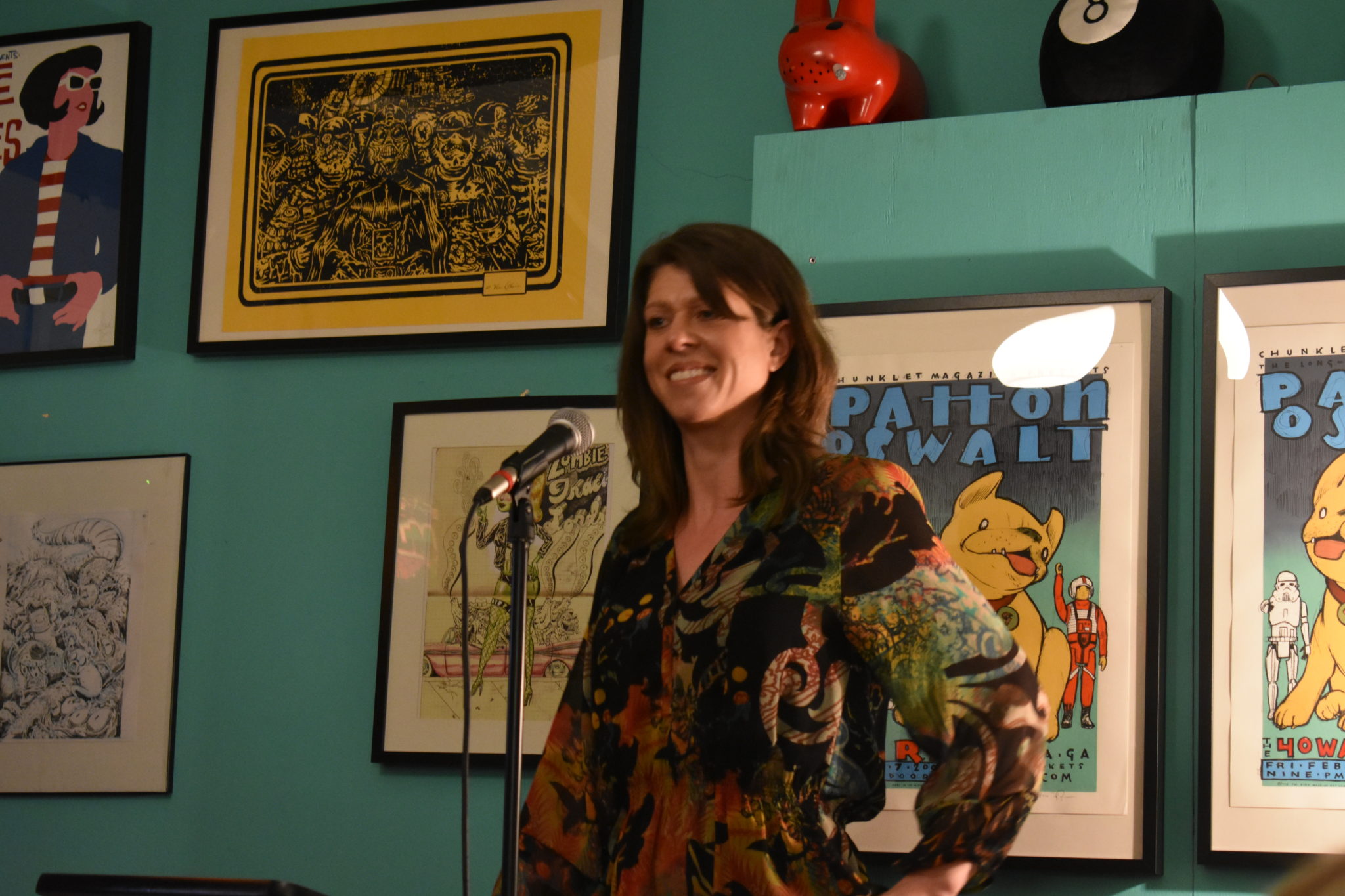
Poet, Elizabeth Hazen, is featured alongside other notable names in the Baltimore literary scene such as Dora Malech and Steven Leyva in this extolling article from Baltimore Fishbowl writer Jennie Hann.
Elizabeth Hazen, who has written several essays for the Fishbowl, released her latest collection, Girls Like Us, in March right before the upswing of the pandemic. Since then, GLU has received much critical acclaim garnering glowing reviews from publications such as The Literary Review, Lit Pub, and London Grip. Jennie Hann's article praises the feminist commentary of GLU and Hazen's incisive and economic style which "twist[s] the knife yet deeper." An excerpt follows below:
By day, Hazen teaches English at Calvert School. We’re told on good authority that her classes are “lit”—as in, exciting, turned on, ablaze. No accident, then, that Girls Like Us has been described as “poetry on fire.” From the first page, Hazen’s words burst into flame, lingering in the mind with explosive residue long after the book has been shut. Take, for instance, “Devices,” which opens the volume and sets its tone. On the surface, this is a conventional list poem, a series of mnemonics to help students learn poetic terms (also known as “devices”). Dry material? Wait until Hazen strikes the match between her teeth:
Assonance
repeats vowel sounds: hot bod, dumb slut, frigid bitch.
Even his line—“Girl, we’ll have a fine time”—
or her refusals—“No! Don’t!”
Just like that, a clever exercise becomes a meditation on the casual misogyny of everyday life and language. We often think of poetic diction as elevated or rarified. Hazen dispels that notion. She writes poetry that’s legible because it’s also real and relate-able. Notice, above, how her carefully chosen slang examples riff on the note sounded by the term’s first syllable (“ass-”). Am I right to think you won’t have any trouble remembering “assonance” from now on?
Featured Audio: “Letter from Sligo Creek” a poem by Rose Solari
Like the cover photo, the poems in Difficult Weather are timeless and—unlike the poems in many first books—extraordinarily mature. Although the narrative voice is generally that of a young woman in her late twenties and early thirties whose subject matter sometimes ranges back to early childhood, these are poems of adulthood: the discovery and endlessly painful rediscovery of human frailty, sexual and emotional betrayal, bad love in all its familial and romantic varieties, memory, and elegy…
Listen to Grace Cavalieri Interview fmr. Poet Laureate Robert Pinsky
Grace Cavalieri is known widely for her stirring and empathic poetry, collected in her Legacy work Other Voices, Other Lives, but did you know that she is also an impressive interviewer? On her NPR show, The Poet and The Poem, she interviews significant poets from the US and around the world, with an aim of interpreting their lives through their poetry. In her tenure on the program, she has interviewed 9 US Poets Laureate (you can find a list with these archived interviews HERE), including the incomparable Robert Pinsky.
Featured Poetry: “Toytown” by Grace Cavalieri
The name Other Voices, Other Lives, is not purely poetical, in fact, for Grace Cavalieri it is a mission statement. In her Legacy Book of the same name there are several sections in 3rd person omnipotent which aim to breathe the same air as famous women who have suffered adversity. Tragic figure Anna Nicole Smith, feminist writer Mary Wollstonecraft, Cora from William Carlos William’s Kora in Hell. All in all they are an admix of Grace Cavalieri’s poetic life, all brought together in one beautiful volume; so, perhaps, we might figure that Anna Nicole Smith converses with Mary Wollstonecraft for the very first time in the pages of Other Voices, Other Lives.
Today, from the Anna section we have the heart-rending “Toytown”