David Downie Interviewed by Author, Leslie Pietrzyk
David Downie discusses his new novel Red Riviera on Leslie Pietrzyk's "Work-in-Progress"
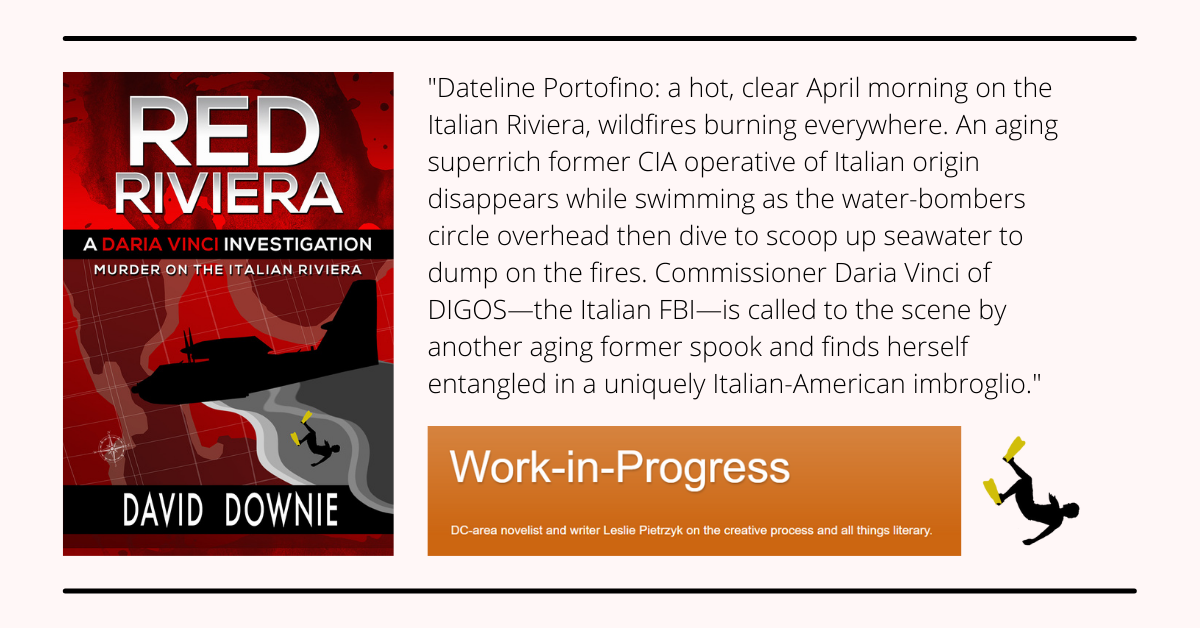
Renowned travel writer, David Downie, tackles the trials and tribulations of the crime novel with astounding acuity. Critics and peers agree, Red Riviera is "unforgettable" and "marvelous," and Downie's intrepid heroine, Daria Vinci, is a force to be reckoned with. In this new interview conducted by Leslie Pietrzyk, David Downie details the creation of Red Riviera and Daria Vinci, offers up some writing advice, and gives a recipe for Daria's favorite food, Classic Ligurian olive oil focaccia.
Read the entire interview here.
Excerpt below:
My favorite writing advice is “write until something surprises you.” What surprised you in the writing of this book?
Wow, so many things surprised me that I wouldn’t know where to start. Daria and the other characters in Red Riviera took shape as if conjured and then they ran wild. I had a hell of a time keeping them under control. It’s as if they were really alive and simply refused to obey the will of their creator.
Also surprising, I discovered that some of the things I had dreamed up and considered pretty outlandish were not only feasible but had actually occurred. Water-bombers do sometimes scoop up things—I won’t go into detail—other than water. Ancient Roman shipwrecks have been found exactly where I said one would be—a year or more after I’d finished writing the novel. The character I based the marquise on did in fact turn a hundred years old after I’d written the book and before its pub date.
How did you find the title of your book?
The title Red Riviera found me. I was on the Italian Riviera—that’s where I spend part of each year and have done since the 1980s. The sand blowing over the Mediterranean from North Africa in the sirocco wind was red. The hillsides were red from blazing wildfires. The flame-retardant chemicals being dropped by the Canadair water-bombers were red and left a red powdery stain on the landscape. The bougainvillea vines growing everywhere had red (or purple) blooms.
Lastly, red used to be the color of communism everywhere, right? Reds, pinkos? (That’s one reason I never understood the GOP’s adoption of the color, though I admit, I understand nothing about the GOP, most of all its continued existence). Italy had one of the world’s biggest communist parties and one of the strongholds of communism in the country was Genoa. Genoa is the capital of Liguria, the official name of the Italian Riviera. There has always been this juxtaposition of Genova la rossa—Red Genoa—and the black, fascistic, rich, glitzy Riviera spreading on either side of the big old industrial city. Then the politics shifted in the 2010s and the colors got muddled and everything started to look black and mottled and stained blood-red. At least, it did to me.

James J. Patterson Discusses his Favorite Early Feminists on episode 9 of LFTRR
In this episode of Live from the Reading Room, James J. Patterson discusses two of his favorite early feminist icons, Bertha Von Suttner and Adrienne Lecouvreur.
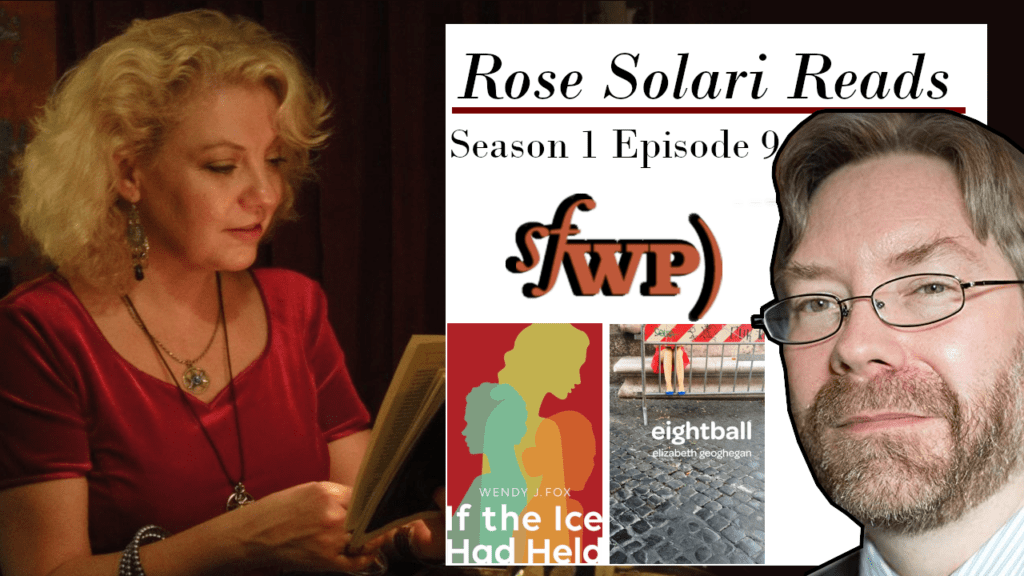
Rose Reads #9 Heralds the Good Works of SFWP
On this special episode of Rose Reads, Rose Solari discusses books from fellow small press, Santa Fe Writer’s Project, run by publisher, Andrew Gifford. Rose reads from two wonderful books, Wendy J. Fox’s If the Ice had Held and eightball by Elizabeth Geoghegan.

Episode 8 of LFTRR Explains the “First Page Test”
James J. Patterson is the reluctant scholar and on this episode of LFTRR he reads the from his essay of the same name. He also reads from books that have passed his “First Page Test” including “Night Train to Lisbon” by Pascal Mercier, “The Great Gatsby” by F. Scott Fitzgerald, “The Muse” by Jessie Burton, “The Tropic of Cancer” by Henry Miller, and “Confessions” by Jean-Jaques Rousseau.