WOMAN DRINKING ABSINTHE Analyzed by Billy Mills
Former Guardian Literary Journalist, Billy Mills, analyzes the conception of love in Katherine E. Young's new collection.
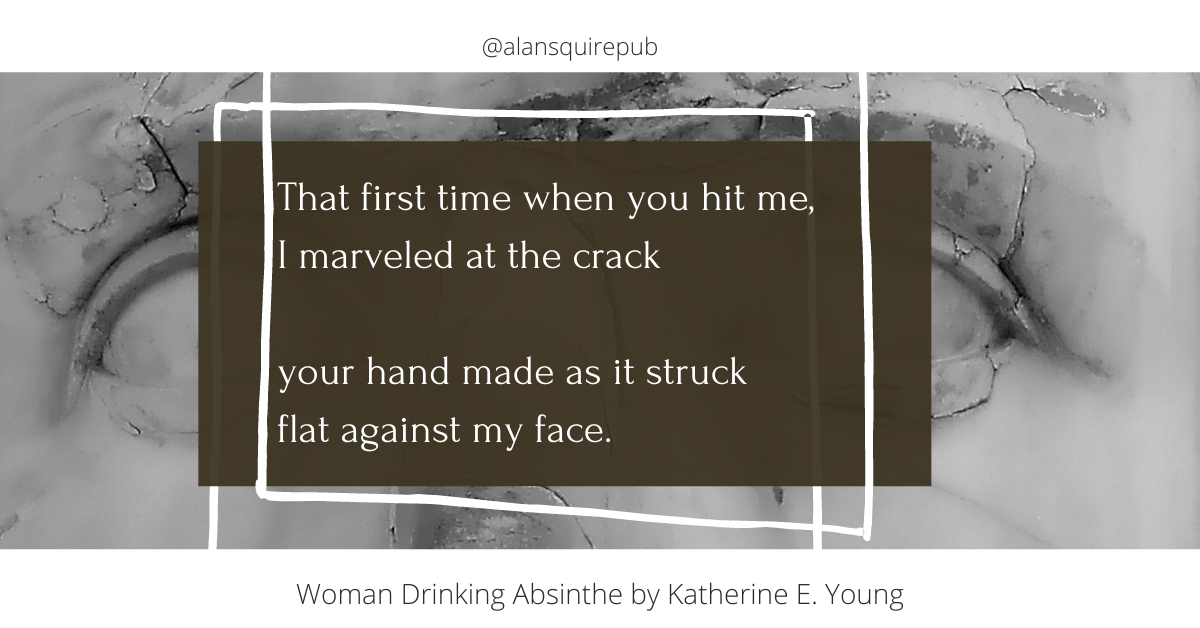
"Young’s core subject is love, but there’s nothing redemptive or particularly healing about its manifestations," writes Billy Mills in his analysis of Young's Woman Drinking Absinthe. Elsewhere he compares the different manifestations of this theme to coeval poets Christopher Jane Corkery and James Roome.
Mills analysis is fitting for Young's work which comes from a deeply literary place and is steeped in evocative allusion. Mills places WDA alongside the likes of Pound and Eliot in his thinking. Like these poets, Young uses unorthodox and historically informed forms and diction in her poetry.
An excerpt of Mills' analysis follows:
"The fourth (of five) sections of Katherine E. Young’s Woman Drinking Absinthe is a single sequence, ‘Place of Peace’ that takes off from a visit to the Civil War memorial at Shiloh National Military Park. The fourth section of the sequence opens with he line ‘Who doesn’t desire to be mesmerized by love?’ and ends ‘once more I fear the shadow of his hand.’ These lines could be said to serve as the twin poles of the entire collection.
For Young’s core subject is love, but there’s nothing redemptive or particularly healing about its manifestations."
The poems in Katherine E. Young’s Woman Drinking Absinthe concern themselves with transgressions. Lust, betrayal, guilt, redemption: Young employs fairy tales, opera, Impressionism, Japonisme, Euclidean geometry, Greek tragedy, wine, figs, and a little black magic to weave a tapestry that’s as old as the hills and as fresh as today’s headlines.
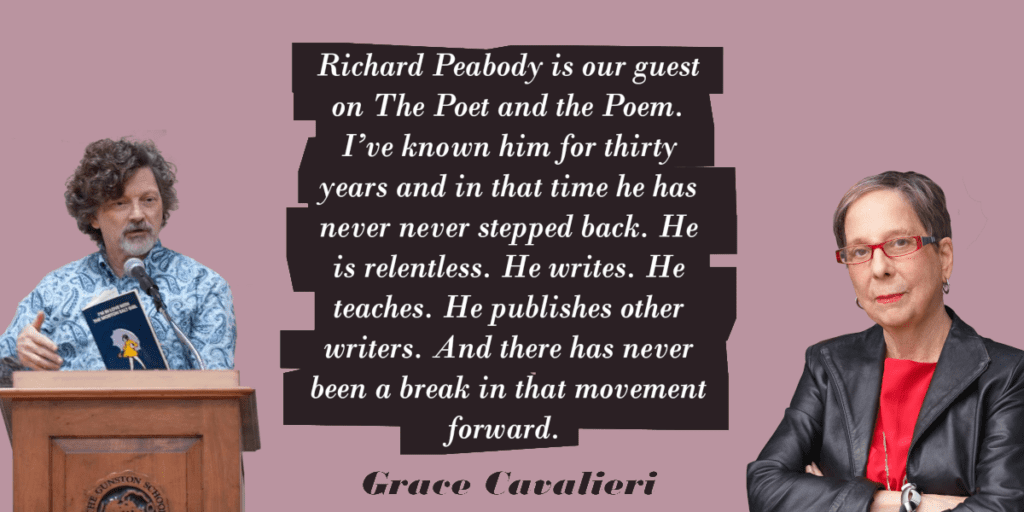
Listen to Richard Peabody on The Poet and The Poem
Listen to Richard Peabody on Grace Cavalieri’s podcast, “The Poet and The Poem.”

Joanna Biggar talks “Melanie’s Song” and Thanksgiving Recipes with Leslie Pietrzyk
Joanna Biggar interviewed by author Leslie Pietrzyk.

“Nuages (after Django Reinhardt)” A Poem by Richard Peabody
Today, a poem by Richard Peabody centered on themes of fatherhood with a twist in homage to the jazz virtuoso, Django Reinhardt.