Saida Agostini's “let the dead in” Featured in Ms. Magazine
Saida Agostini's debut collection of poems receives a glowing recommendation from Ms. Magazine in three words: "Mythology, ancestry, triumph."
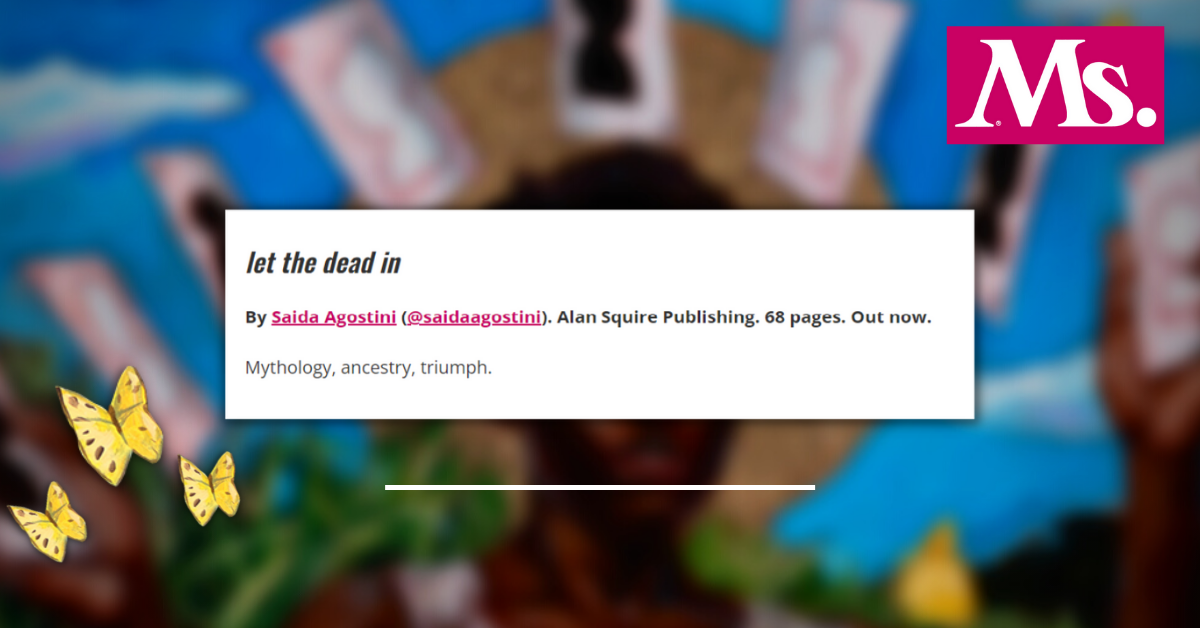
Popular American feminist megazine, Ms. Magazine, shouts out Saida Agostini's much raved about new collection of poems in a listicle posted on April 20th entitled "Poetry for the Rest of Us 2022." With three words, "Mythology, Ancestry, Triumph" Ms. places Agostini's let the dead in among recent poetry standouts like Salmas Sharif's Customs and Aurielle Marie's Gumbo Ya Ya. Ms. Magazine has a long history of supporting female-identifying artists and the editor's whole-hearted support for Agostini's latest is welcome and merited.
Saida Agostini’s first full-length poetry collection, let the dead in, is an exploration of the mythologies that seek to subjugate Black bodies, and the counter-stories that reject such subjugation. Audacious, sensual, and grieving, this work explores how Black women harness the fantastic to craft their own road to freedom. A journey across Guyana, London, and the United States, it is a meditation on black womanhood, queerness, the legacy of colonization, and pleasure. These poems craft a creation story fat with love, queerness, mermaids, and blackness.
Read a poem from let the dead in Here, watch her discuss ltdi Here, and order your copy Here

Reuben Jackson Joins WPFW’s “The Sound of Surprise”
Beginning May 1st, Reuben will begin as host of DC radio channel WPFW’s “The Sound of Surprise.” The show runs from 4 to 6pm and Reuben will be alternating every other Sunday with the program’s creator, Larry Appelbaum.

A Book and Its Cover: Rose Solari Reviews Two New Collections of Poetry for WIRoB
Rose Solari’s latest review column for Washington Independent Review of Books tackles two stellar new collections by established small-press poets, Terry Ellen Cross Davis and Dan Beachy-Quick. As with all her reviews, Rose uses a common theme to link the subject matter of the books she is reviewing. This month, she explores how the cover design is mirrored by the poetry and vice versa.
New Review of Girls Like Us: GLU “Bulges with Debilitating Last Lines”
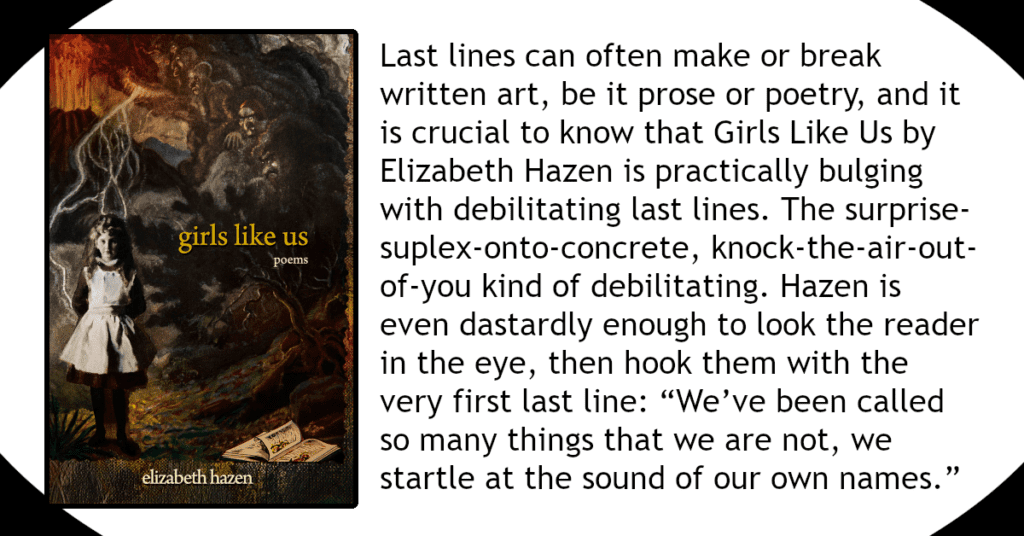
In Lannie Stabile’s new review of Elizabeth Hazen’s second collection Girls Like Us, she raves about the effect of Hazen’s “last lines.” Girls Like Us, she says, is “bulging with debilitating last lines.” Like this one in the opening poem “Devices,” that Stabile points to as like a “hook,” “We’ve been called so many things that we are not, we startle at the sound of our own names.”