Saida Agostini's “let the dead in” Featured in Ms. Magazine
Saida Agostini's debut collection of poems receives a glowing recommendation from Ms. Magazine in three words: "Mythology, ancestry, triumph."
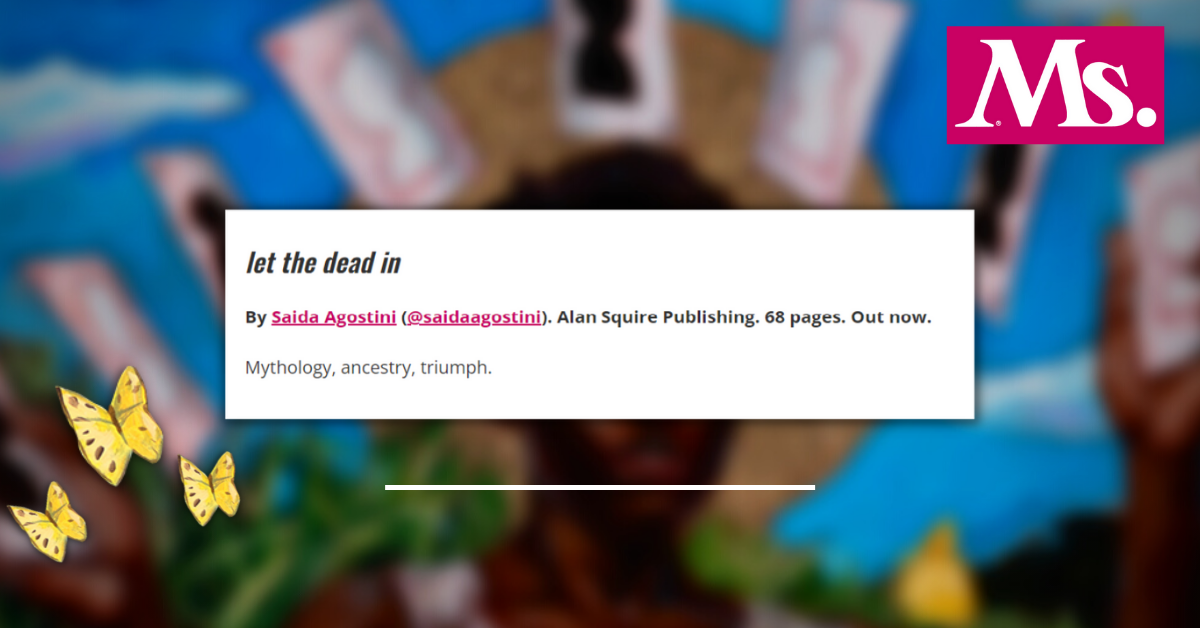
Popular American feminist megazine, Ms. Magazine, shouts out Saida Agostini's much raved about new collection of poems in a listicle posted on April 20th entitled "Poetry for the Rest of Us 2022." With three words, "Mythology, Ancestry, Triumph" Ms. places Agostini's let the dead in among recent poetry standouts like Salmas Sharif's Customs and Aurielle Marie's Gumbo Ya Ya. Ms. Magazine has a long history of supporting female-identifying artists and the editor's whole-hearted support for Agostini's latest is welcome and merited.
Saida Agostini’s first full-length poetry collection, let the dead in, is an exploration of the mythologies that seek to subjugate Black bodies, and the counter-stories that reject such subjugation. Audacious, sensual, and grieving, this work explores how Black women harness the fantastic to craft their own road to freedom. A journey across Guyana, London, and the United States, it is a meditation on black womanhood, queerness, the legacy of colonization, and pleasure. These poems craft a creation story fat with love, queerness, mermaids, and blackness.
Read a poem from let the dead in Here, watch her discuss ltdi Here, and order your copy Here
Patterson Reads HUIDEKOPER on the New LFTRR
In this episode of LFTRR, James J. Patterson reads “HUIDEKOPER”, a story about a wild group home full of artists and musicians.
Elizabeth Hazen Shares Her Tsundoku (Poetry Books to Read)
In a new guest blog post, Elizabeth Hazen shares some cool words from all over the world, and gives us a peek into her recently conquered tsundoku.
Rose Reads, Writing about Art and an UPDATE
On the 12th episode of Rose Reads, Rose Solari goes in-depth on writers writing about writing and art. She reads from her own novel which contains a good deal of beautiful prose about visual art, A Secret Woman, and the extraordinary short work of Richard Peabody as found in The Richard Peabody Reader.