Former Student Describes Reuben Jackson’s Jazz-infused Poetry Class
“I’m going to play you some John Coltrane,” he said, his voice serious, soft-spoken. “Some people say Coltrane sounds like a bunch of salad,” he continued, “but it’s all in the way he mixes it.” He pressed “PLAY” and told us to write what came to mind.
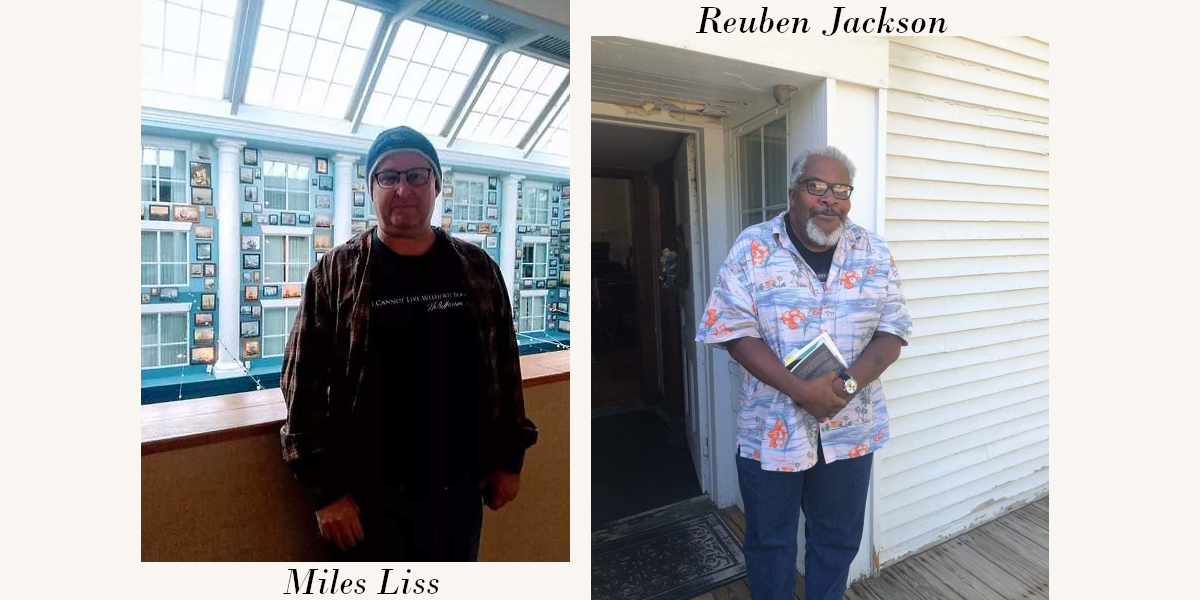
Miles Liss, who recently graduated with an MFA in poetry from Vermont College of Fine Arts, reflects on his time taking classes under maestro Reuben Jackson in this short essay. You can read the whole thing on Past-Ten here. Read Reuben's poetry here.
In the essay, Liss describes Reuben's unorthodox approach to teaching poetry, specifically his focus on extemporaneous writing in a similar vein to the off-the-cuff soloing and improvisation of jazz musicians. Below is an excerpt:
“I’m going to play you some John Coltrane,” he said, his voice serious, soft-spoken. “Some people say Coltrane sounds like a bunch of salad,” he continued, “but it’s all in the way he mixes it.” He pressed “PLAY” and told us to write what came to mind. Like a silent Miles Davis exiting the stage to give his fellow musicians an opportunity for expression, our instructor left the room.
As Coltrane played, I pressed my pencil against notebook paper and started writing. The words came out in a rush, in rhythms I had already possessed. It felt natural, in a way fiction never did. There was no agonizing over characters, plot charts and index cards. It was pure emotion.
We went around the room, reading our poems. I had two short pieces, riffs on cityscapes, and though I was nervous, I read them aloud. When I looked up, he was watching me, deep in thought and leaning back in his chair. He said nothing. Weeks later, he’d verbalize his praise, but for the time being, the silence spoke. As Miles Davis knew so well, the real music was in the silence.
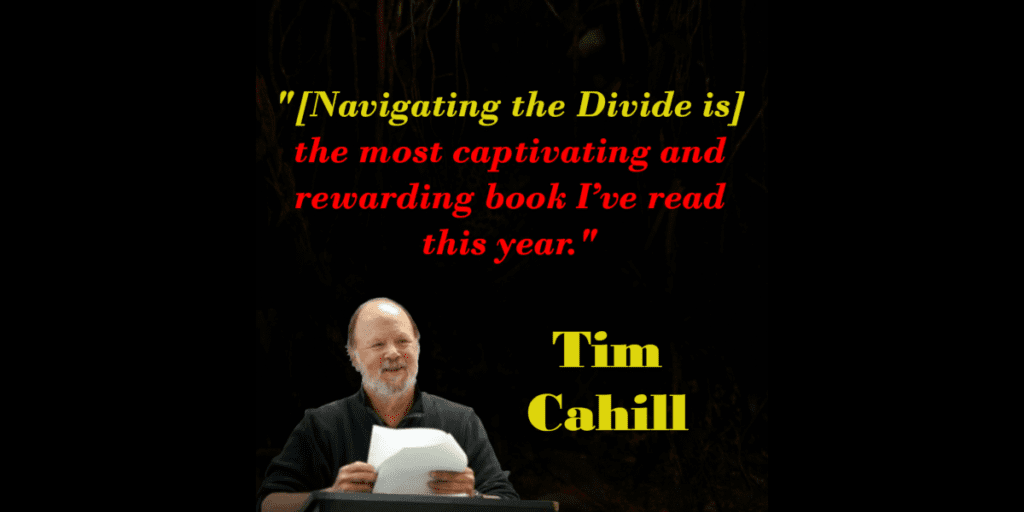
Tim Cahill calls ‘Navigating the Divide’ the “Most Rewarding Book I’ve Read This Year”
Learn what famed travel writer, Tim Cahill, has to say about Linda Watanabe McFerrin’s new ASP Legacy Book, “Navigating the Divide.”

Joanna Biggar Reveals the Heart’s Center of her Newest Novel
After 2015’s That Paris Year which followed a group of young women on their year-abroad at the Sorbonne—their youthful flings as well as their many rites of adulthood— Joanna Biggar is bringing its spiritual sequel Melanie’s Song overseas to her own hometown in the United States. Set in Califonia amid the cultural revolution of the late 60s early 70s, Melanie’s Song, while not a direct sequel to That Paris Year shares many of its characters and its familiar, lavish lyrical style. In MS, J.J., the protagonist of That Paris Year, a young reporter, is on a quest to find her missing friend, Melanie (the archetypal shy scholarly type and another character from TPY) who fled her marriage to a straight-laced classical musician in order to hitch-hike to Woodstock and San Francisco.
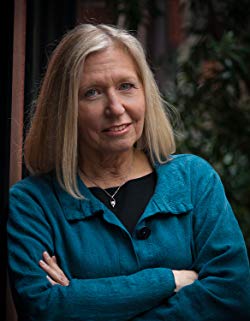
What Does Patricia Bracewell Have to Say about “Melanie’s Song”?
What does bestselling historical fiction author, Patricia Bracewell, think of Joanna Biggar’s latest novel, “Melanie’s Song”?