New Review of Girls Like Us: The Collection "Bulges with Debilitating Last Lines"
"The surprise-suplex-onto-concrete, knock-the-air-out-of-you kind of debilitating. Hazen is even dastardly enough to look the reader in the eye, then hook them with the very first last line: 'We’ve been called so many things that we are not, we startle at the sound of our own names.'"
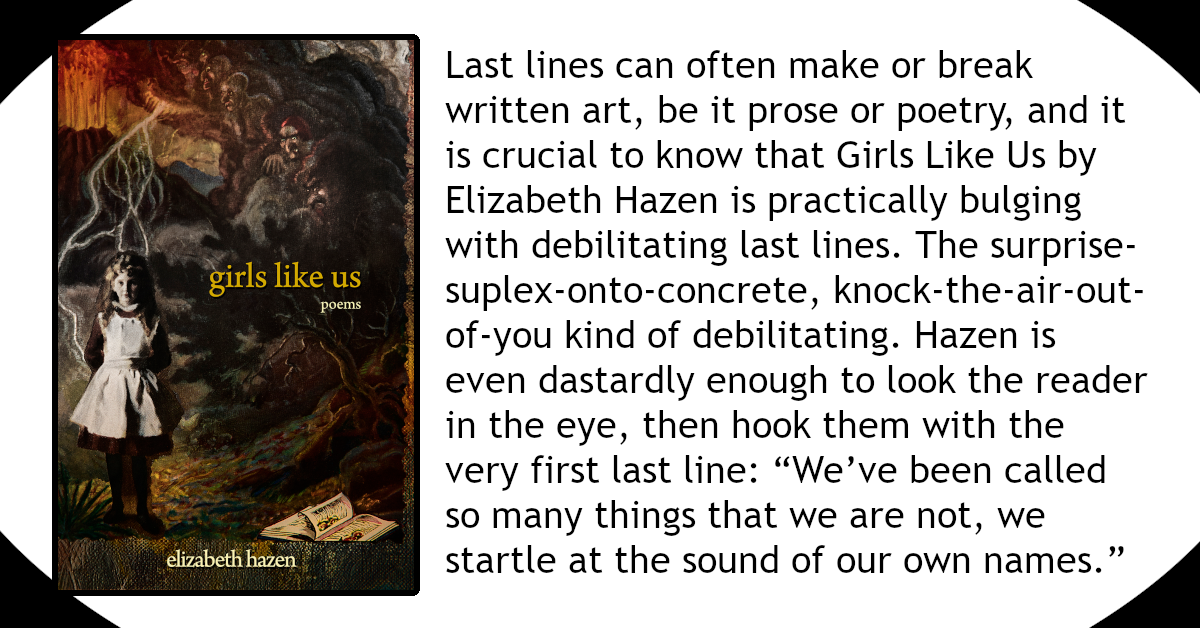
In Lannie Stabile's new review of Elizabeth Hazen's second collection Girls Like Us, she raves about the effect of Hazen's "last lines." Girls Like Us, she says, is "bulging with debilitating last lines." Like this one in the opening poem "Devices," that Stabile points to as like a "hook," “We’ve been called so many things that we are not, we startle at the sound of our own names.”
Stabile's review appears in The Poetry Question which seeks to lift the voices of small press poetry. Stabile is the Managing Editor at Barren Magazine and is a member of the MMPR Collective.
Girls Like Us is Hazen's second collection of poems after Chaos Theories (2016).
Featured Audio: “Achilles on Shore,” a reading by Rose Solari
Rose Solari reads “Achilles on Shore” “No one reads poetry like Rose Solari. She enters the essence of each word with a voice, making meaning become spirit. I think her […]
Featured Audio: “Jesse Lancaster Remembers,” a reading by James J. Patterson
James J. Patterson reads “Jesse Lancaster Remembers” from Roughnecks “[Reading James J Patterson] is like sitting down with a very intelligent friend and having the kind of conversation you’d always wanted […]
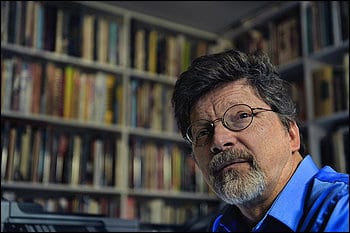
[Richard Peabody] His Great Feature in The Washington Post
Richard Peabody has spent most of his adult life nurturing and promoting Washington’s literary output. Gargoyle, a thick doorstop of a literary magazine that he has published since 1976, has amassed a list of distinguished contributors, including eight National Poetry Series winners, five National Book Award winners, three PEN/Faulkner winners, three Pulitzer Prize winners, and winners of more than a dozen other honors. And he can count at least 30 former university, Writer’s Center and private creative writing students who have gone on to sell screenplays or publish books, including many with the most prestigious New York publishing houses.